
Beautiful, mystical Bhutan, the ‘Thunder Dragon Kingdom’ is a jewel in the crown of the Himalaya, a last Shangri-La, and bastion of the Vajrayana school of Mahayana Buddhism.
This tiny medieval kingdom, with its rich and unique cultural heritage, has largely remained intact because of its isolation from the world, until the early 60s. Here, buying cigarettes is illegal, and the men still dress in a traditional knee-length gho, tied with a kera, and walk around with mobile phones, and women wear an ankle-length kira, and a long-sleeved toego.
A unique finely balanced blending of old traditions, and an ultra-modern advancement into the computer age, where the ban on having a television or the internet was lifted in just 1991.
The previous King opened the zoos and let the animals go free
Identified as a global biodiversity hot spot of natural unspoilt beauty, Bhutan still has over 72 percent forest cover and is seen as a model for pristine conservation initiatives. Receiving international acclaim for the maintenance of its biodiversity, with more than 40 percent of its territory designated as national parks, the previous King opened the zoos and let all the animals go free.
Landlocked between the Tibetan Autonomous Region and India, the landscape falls from steep icy mountain ranges to a lush sub-tropical forest in the south, consisting of deep valleys and swift-moving rivers, with the black Mountains in the middle.

Dechencholing Palace, Thimphu, capital of Bhutan
Bhutan’s national animal is the takin, known also as the gnu goat, residing high up in the alpine regions alongside the Tibetan wolf, blue sheep, and snow leopards. Bengal tigers, clouded leopard, rhino, water buffalo, and rare golden Langur reside more in the southern lowland jungles and savannah. Living amongst the fruit trees and bamboo forest are the Himalayan black bear, red panda, and barking deer, forming a biological oasis of more than 770 species of birds, and over 5,400 different plants.
Buddhism came to Bhutan in the 7th century when the Tibetan King Songtsan Gampo fled religious intolerance in Tibet. Followed by the Buddhist Saint, Guru Rinpoche, arriving on a flying tiger in 747. Much of the past history remains fragmented due to the fires which ravaged the ancient capital of Punakha in 1827, destroying all the old documents.
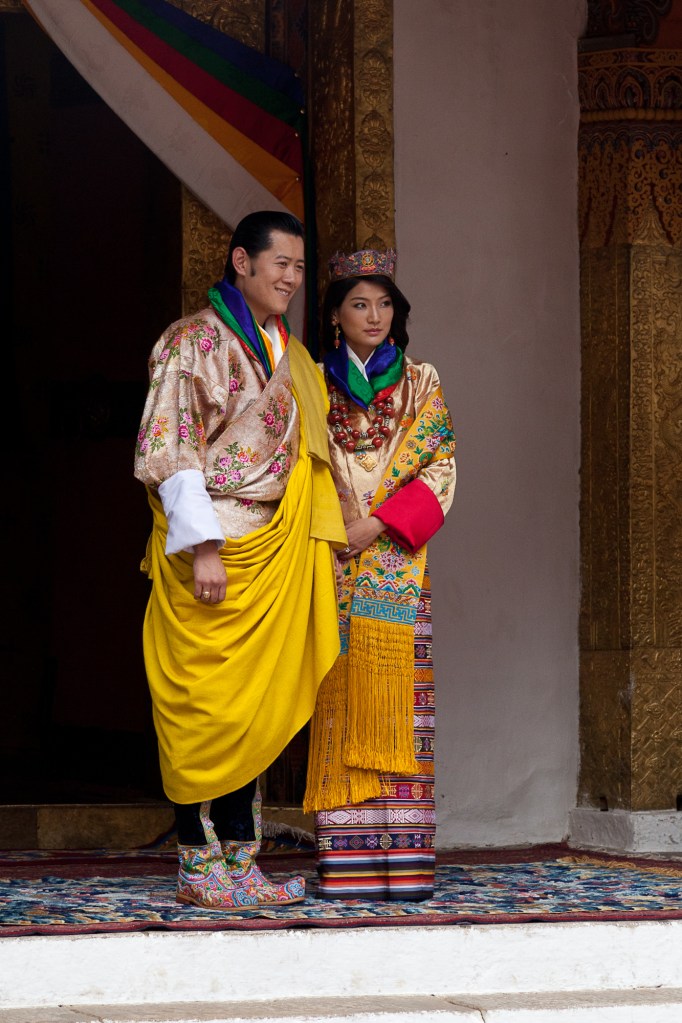

King Jigme Khesar Namgyei Wangchuk, and Queen Jetsun Pema on their wedding day, 2011 – click to enlarge
It was just over a decade ago when the new King Jigme Khesar Namgyei Wangchuk, married Jetsun Pema, setting the international stage alight, with a glimpse of a magical kingdom frozen in time.
This is a place where inheritance passes through the female and equality is clearly defined in the workplace, and the GDP is set at gross national happiness. Archery is a national sport, and taken seriously as a sacred event, as well as a social event, with competitions organized between villages and towns, with plenty to eat and drink, music singing, and dancing.
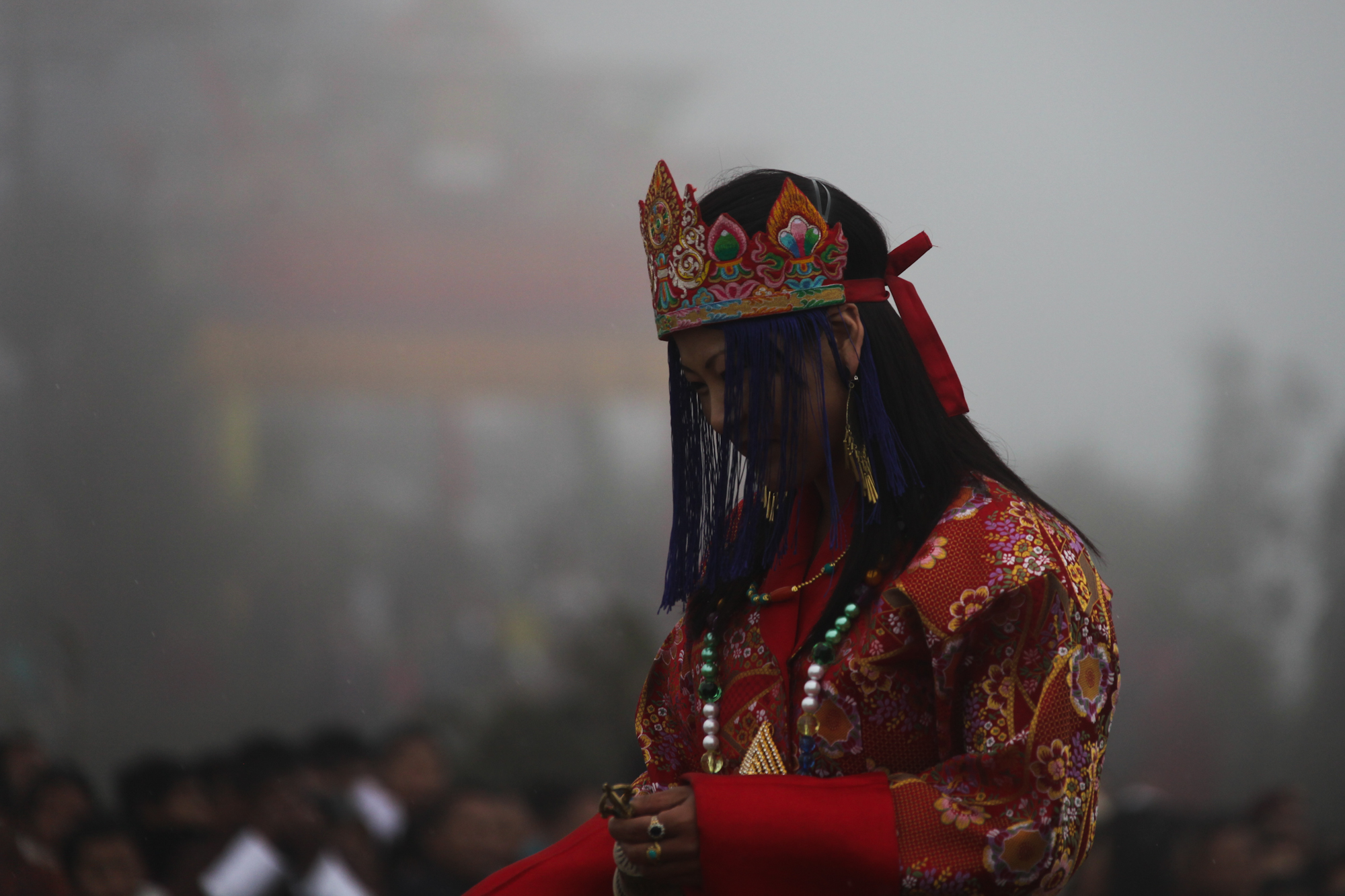
Dochula: Druk Wangyei Festival – click to enlarge
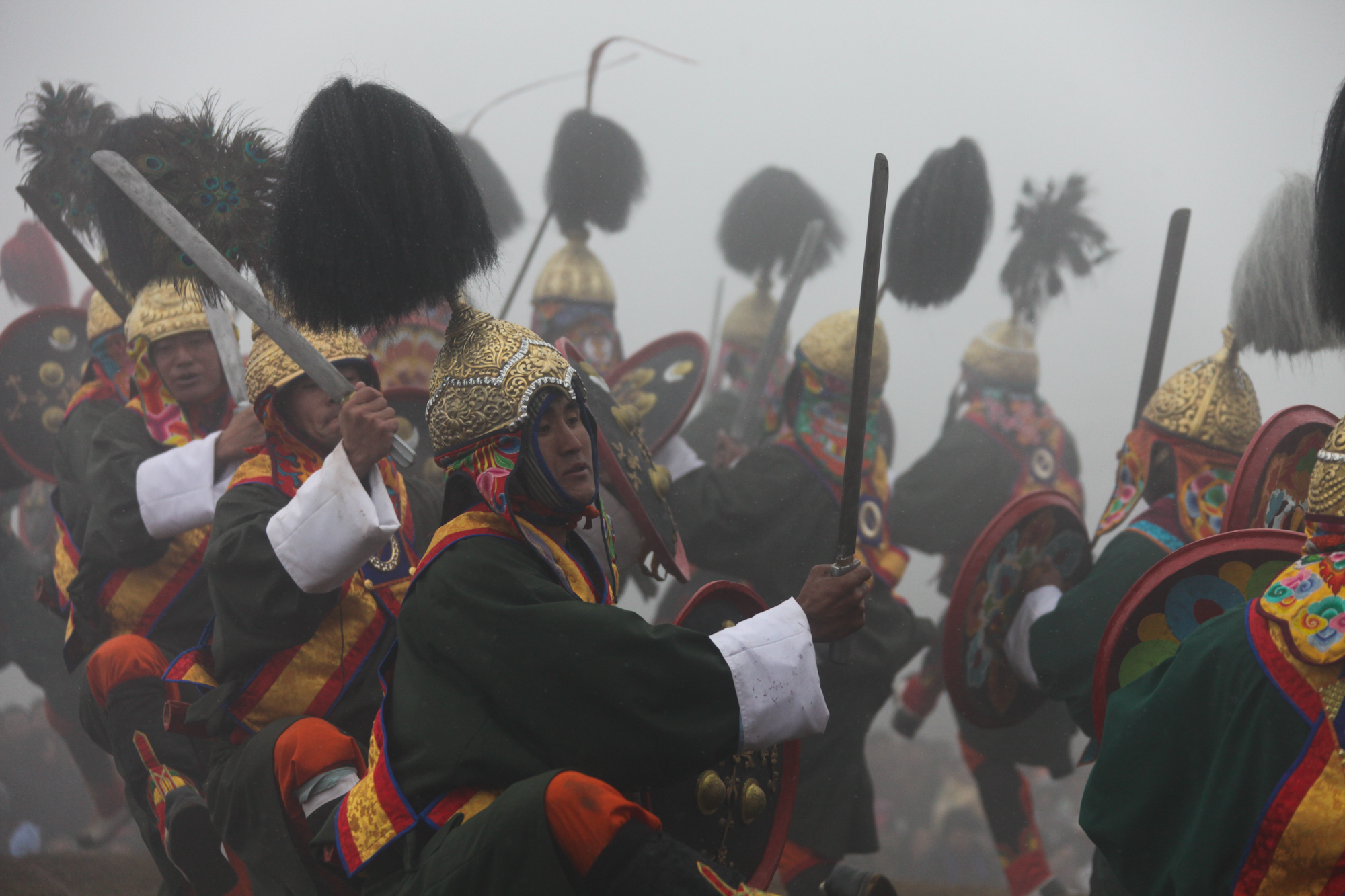
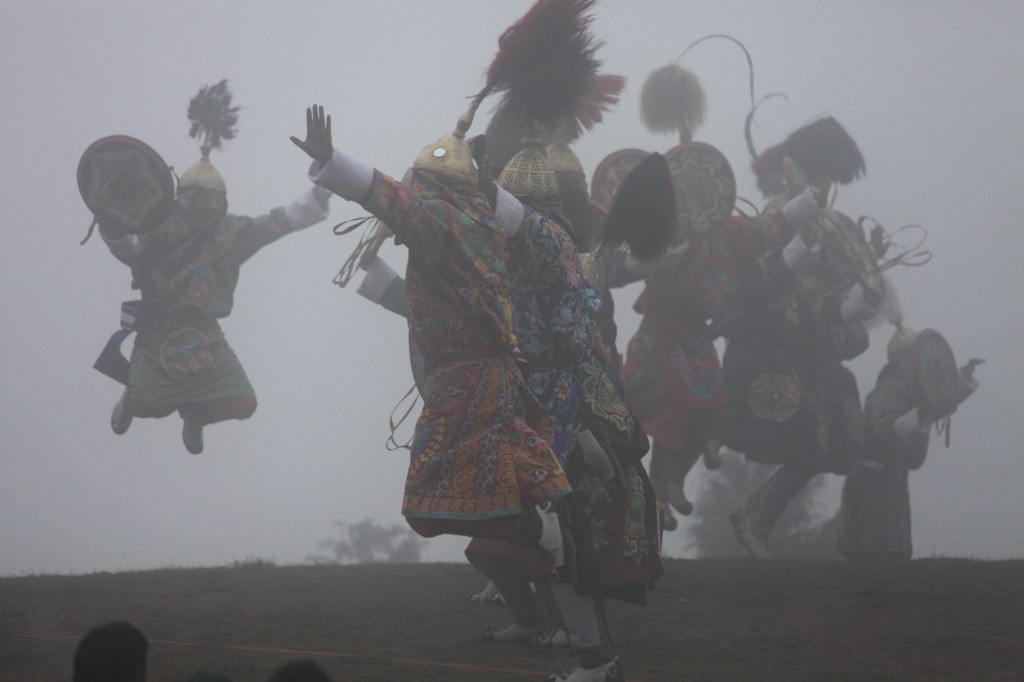
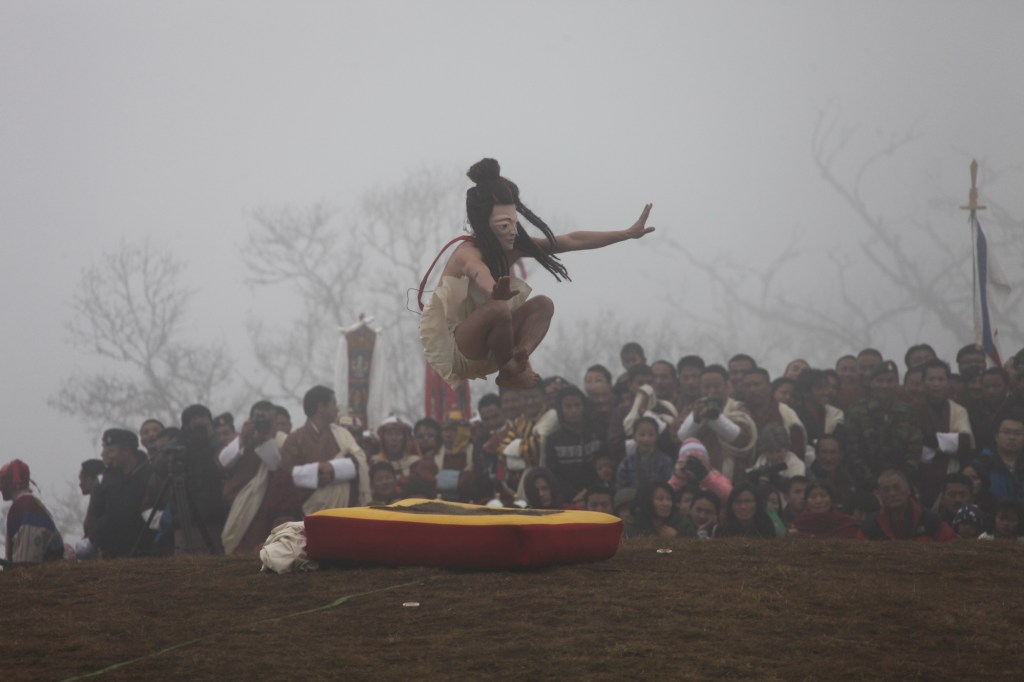
Darts are also highly popular but it is definitely an outdoor event, using heavy wooden darts pointed with a 10 cm nail, which is then thrown at a target 10 – 20 m’s away. Festivals are many and very colorful, with wooden masks depicting heroes, demons, death heads, animals, gods, and caricatures of common people; with a whirl of dancing, music, and again food and drink, and huge crowds.
In eastern Bhutan, which is largely unexplored and vast, you will find some rare animist rituals and Bon practices, with Lhuentse the ancient ancestral home of the Kings with its dense coniferous forests and home to colorful textile weaving and pottery.
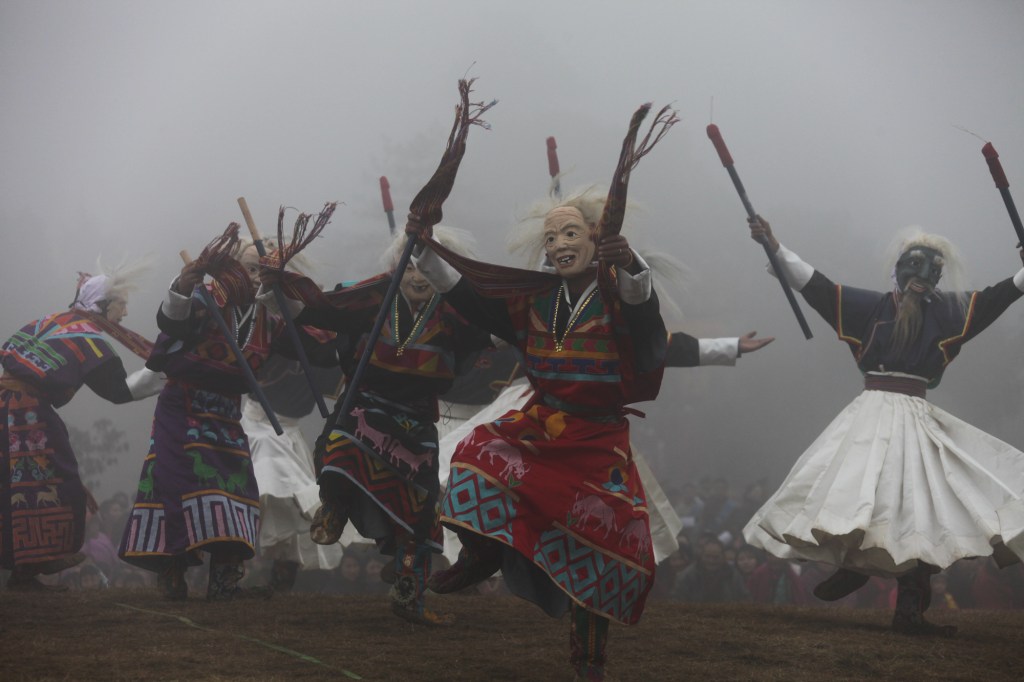
Shamanistic dance
The West, with its Haa Summer Festival and shamanistic rituals and folk dances, the Thimphu Takin Festival, the Punakha Festival with medieval warriors, and the Paro Tshechu, with rice plantations, chilli fields, and museums.
The south is the ecological hub, with the Phibsoo Wildlife Sanctuary and the Royal Manas National Park.
Some of the largest festivals are the Paro Tshechu, in March, and the Thimphu Tshechu in September. Haa Summer Festival in July, and the Crane Festival in early November.
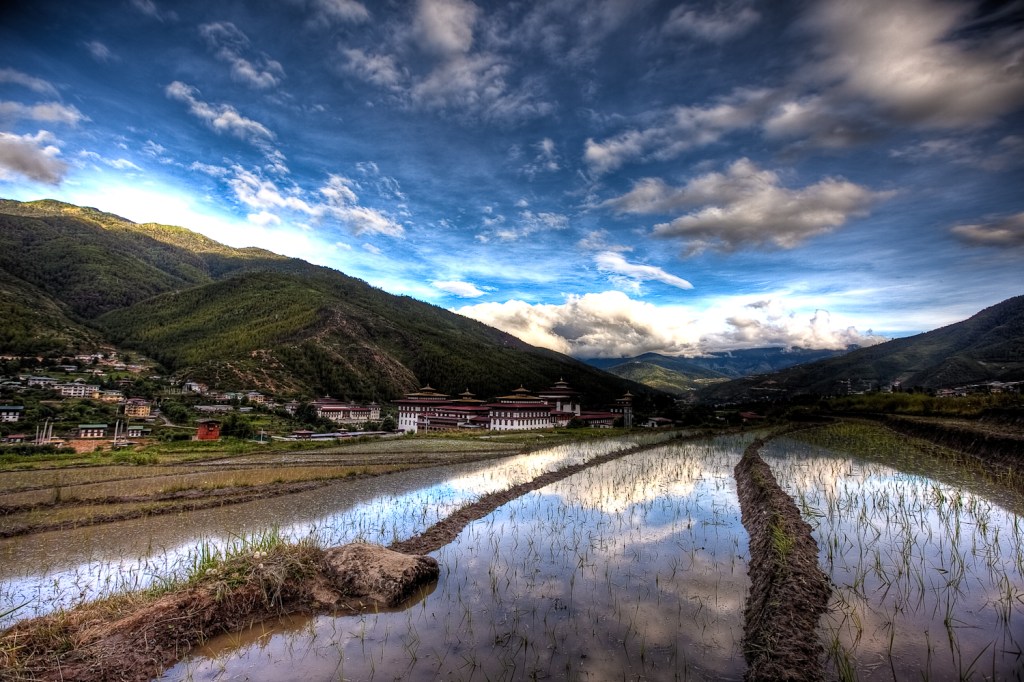
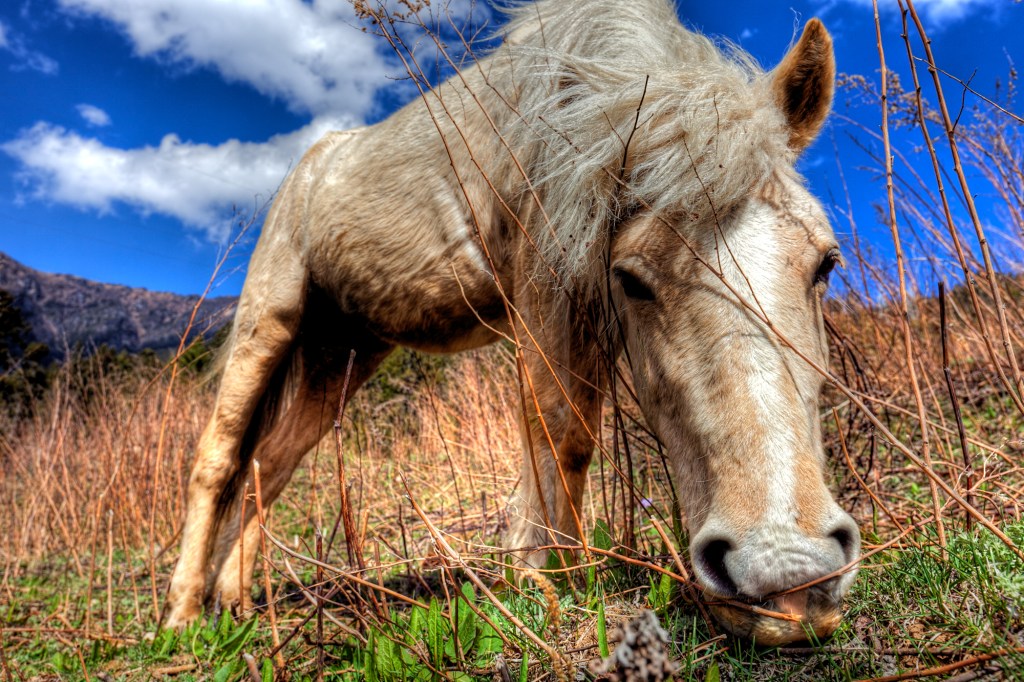
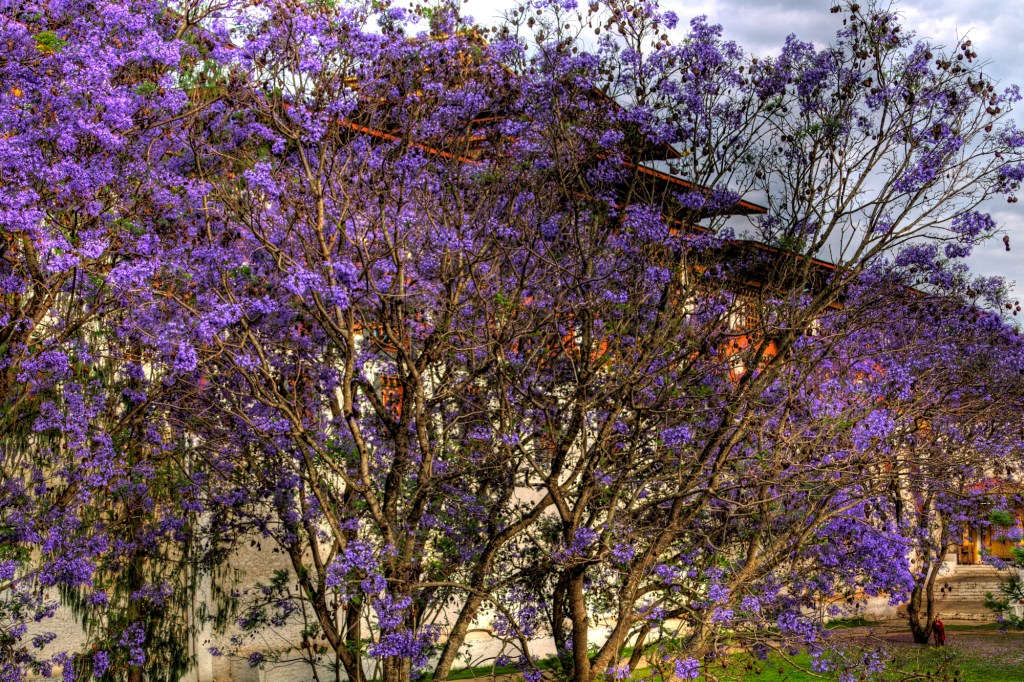
Rice fields, horse in Haa, purple Jacarandas in front of the Punakha Dzong – click to enlarge
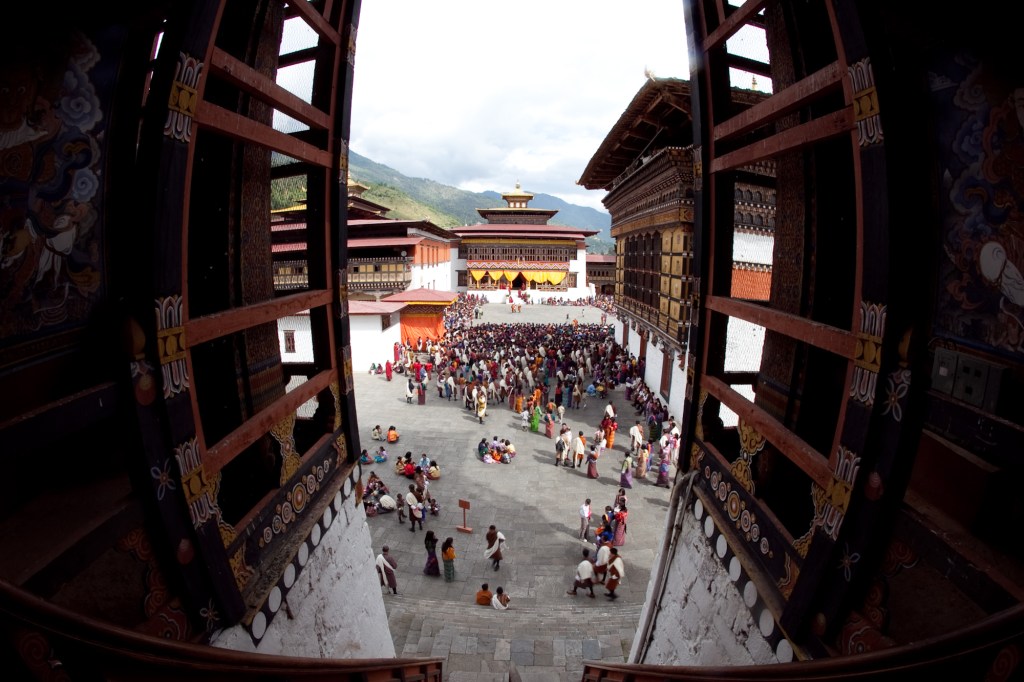
Traditional Bhutanese architecture remains with rammed earth wattle and daub, and stone masonry, with the ancient art of Zhingzo woodwork, kept alive as a master craft. Where no nails or iron bars are used at all in the construction, instead using notches and thick pegs, with nails made of wood, and the windows, doors, and roofs intricately carved.
A characteristic of the region is the fortress dzongs, which have acted as forts, and religious and administrative centres across the 20 districts.

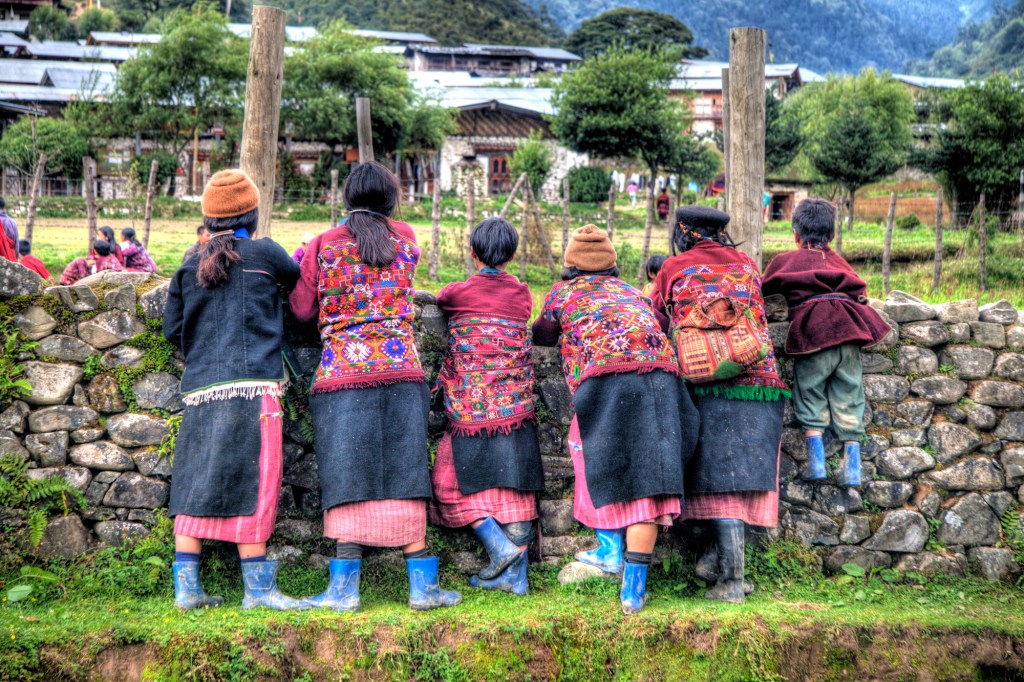
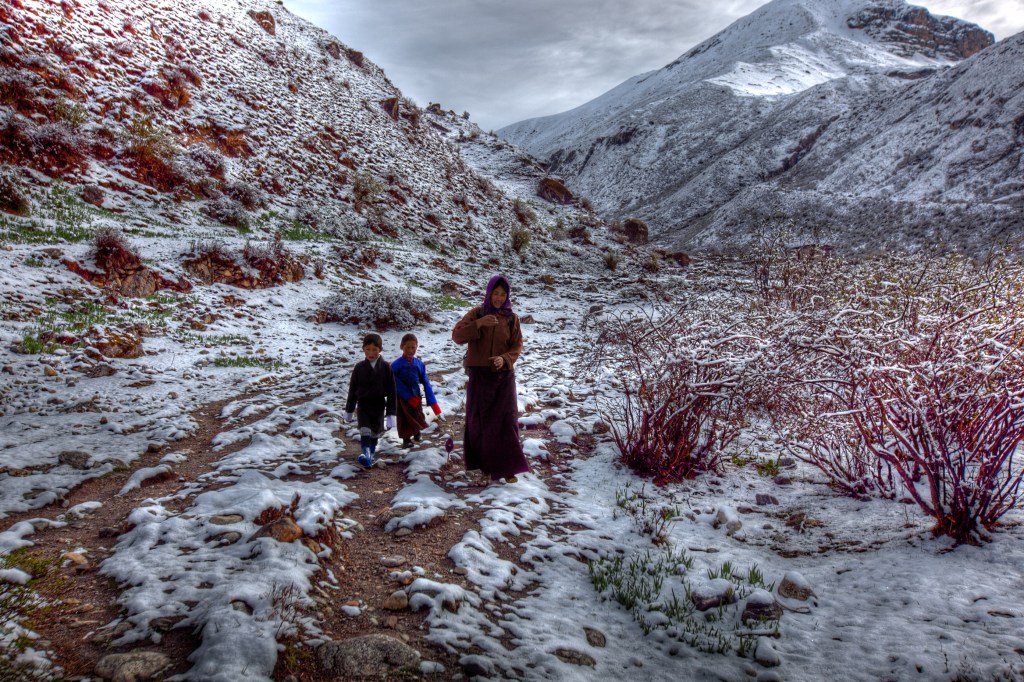
Maize hanging to be dried in Dorji’s family home, in Chali, Mongar. Sakten, Eastern Bhutan – click to enlarge
The cuisine relies heavily on chilli (ema), and the scent of chillies growing around the fields of Paro is intoxicating. By August they are strung up in braided ropes and left to fall in a mass of vibrant fiery color from adobe walls or left to dry in the heat of the sun on rooftops in a blaze of red.
A classic Bhutanese dish is ‘Ema Datsi’ a very spicy dish made with chillies, and a cheese similar to feta. Butter tea is also a favorite, and a locally brewed ara (rice wine).
Traditional hot springs are a great way to relax, and open-air hot stone bathing; with excellent yoga and meditation retreats, traditional herbal medicine, and spas, in abundance. This is also the land of high adventure, with plenty on offer from trekking to mountain climbing, mountain biking, paragliding, rafting, and kayaking.

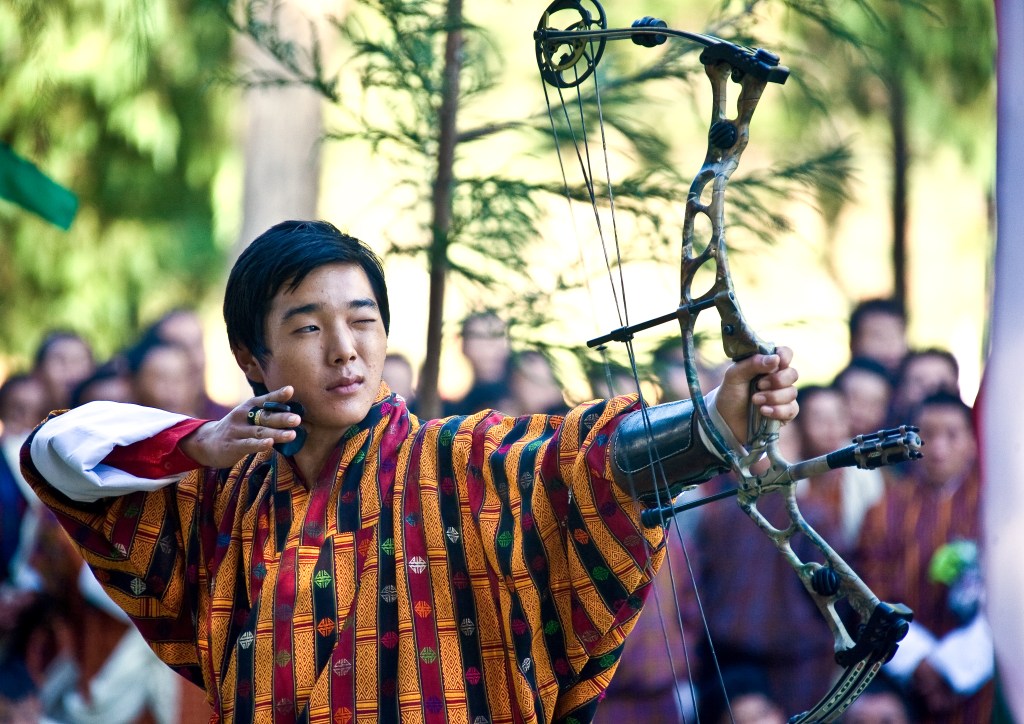
H.R.H. Prince Jigyel Ugyen Wangchuck, at the sacred Dar ceremony at Punakha in celebration of His Majesty Jigme Khesar Namgyel Wangchuck, King of Bhutan. Thimphu Drubhen. Click to enlarge.
The hotels are seriously outstanding and extremely spacious and well appointed, even the smaller ones; plus, there are guest houses and homestays, so do not forget to look into where you would like to stay when you book, as there are so many.
Bhutan is also an all-year destination, with lots to see and do.
- Arts
- Artwork
- Bhutan
- Blog
- Books
- Canada
- Europe
- Europe, UK
- European Union
- Himalaya
- Interview
- Russia
- South East
- UK
- United States
- World
All the photography is courtesy of the King’s photographer: Mr Gelay Jamtsho.

Everyone here seems to have some weird secret or other – Iris Murdoch
By JP
@creatingpages

 DailyNewsVine