Female Spies with Nigel West
Becoming a double agent or handling a triple agent, is a high wire act, it’s very exciting
I arranged to meet with Nigel in the clandestine setting of a loft- above the auditorium, where he was set to speak about female spies at the Canterbury Festival, on special ops and counterintelligence. Easily spotted, he was sat back in a darkened alcove filling the space with his presence, in quiet conversation with someone obscured by the shadows.
Getting into the Cold War mood, I quietly placed a large glass decanter of water on a stark folding table, with a pair of wine flutes, that I had grabbed from the bar downstairs.
Fascinating, he looked over, still deep in conversation, and rose to meet me joining me at the table. I opened the conversation with the Trump-Russia Dossier, Sex, Spies, and Videotape, written by The Times, and the kompromat footage of Trump with Russian prostitutes. Something Nigel dismissed as sheer fabrication, by Chris Steele from MI5. Someone he had known for 10-12 years.
Nigel had been hired to undertake a counterintelligence analysis of the Steele Dossier, remarking:
“The British media were enchanted by Chris,” especially as he was an ex-SIS agent prepared to discuss, “unattributable, classified operations.”
This was a warm-up, as really, I wanted to know if he had worked for the CIA, and MI5, as his books are on the required reading list at Langley for new recruits, including his A-Z dictionary: A Historical Dictionary of Sexpionage.
He assured me that he had worked for the Centre of Excellence at the CIA, which was a recruiting agency to bring women and ethnic minorities into the intelligence community while they are still at university.
“My job was to go around universities and give case histories, to show the intelligence community offers an opportunity to make a difference, that people can devote their career to this kind of work, which is fascinating,” he said. To interest undergraduates in intelligence work irrespective of whether it is the FBI, NSA, or CIA, and explain how rewarding it is.
I pressed on with sexpionage and honey traps, and asked if agents were trained in it, or was it just Russia?
“Well, there is a sexual dimension in virtually every intelligence case,” he said, agreeing that it is still a large part of international intelligence operations. I mentioned the Russian State School Four, and the schools for East German Romeo’s, but he was evasive about going into too much detail on Western operations, in this regard.
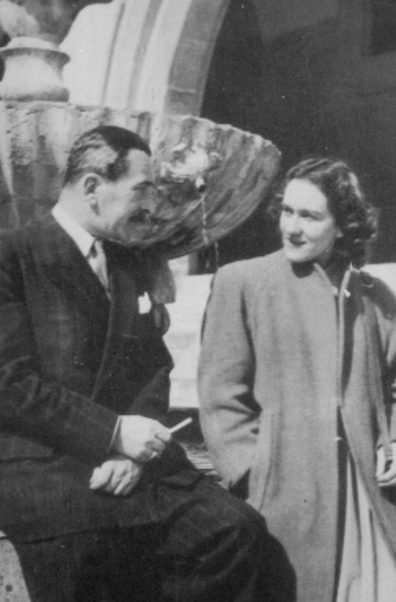
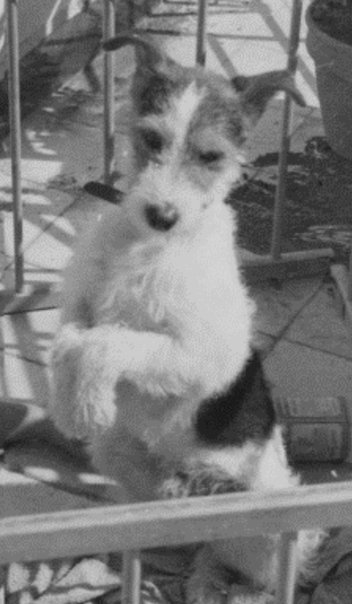
Lily Sergeyev with her German handler, and her ‘beloved’ dog Frisson affectionately called: “Babs”. Images MI5 Security Services.
Many spies fly below the radar, so I asked him who his favorite female spy was?
“There was a woman codenamed Treasure, called Lily Sergueiev, and she is very interesting because she was Russian-born, but she lived in France,” he said, saying that she was a well-known journalist before the war. “Her real name was Nathalie. The Germans called her Tramp, which gives you an indication of her morals.
A triple agent, he went on to explain how she was recruited by a German officer named Emil Kliemann in Lisbon, and then immediately headed to MI5 in London and was instantly recruited. Upset with the British, she then went back to Lisbon to report that MI5 had recruited her.
“So MI5 turned her into a double agent and provided her with information to pass back to the Germans. She then traveled back to Lisbon to report back to Kliemann and unfortunately told him she’d been recruited by MI5.
“So, she became a triple agent, and all this was because she had a little dog,” he said.
Upset with the British, Lily had an explosive and unpredictable nature and was angry over the treatment of her dog Frisson in Gibraltar. Stationed in Madrid by the Germans, she had contacted the British Embassy, offering to spy for them, and was brought over to London.
She became a triple agent, because she had a little dog
“Because of the rabies quarantine rules in Gibraltar, at that time, the little dog had to remain,” said Nigel. “She was absolutely infuriated by this, and then very angry, when the dog, having been promised full facilities, was run over and killed.”
In revenge for the death of her beloved dog, she threatened to undo everything, revealing that she had a secret code word given to her by Kliemann that would reveal if the transmissions were reliable. Although, she did eventually admit details of the coded word.
Lily was recruited as a Double-Cross agent by MI5 and played a crucial role in misinforming the Germans about the location of the D-Day landings, she also spoke seven languages.
“But her motivation is very complex because it turned out she was most certainly a Russian spy as well, recruited by the Soviets to spy in Paris,” remarking that she would have been paid by all sides.
“So Treasure was a very interesting, volatile individual, well connected, with good contacts in English society, and was very friendly with a cousin who was an academic at Cambridge.”
MI5 failed to stop Lily, heading back to a liberated Paris in 1944, where she fell in love with a married American army officer, remarried and wrote a book about her adventures as a spy, and died of Tuberculosis. With no one believing her adventures.
“Becoming a double agent or handling a triple agent, is a high wire act, it’s very exciting,” said Nigel, “it’s a very heavy drug for an agent.” Stating that well-placed sources would have their information placed on the desk of the President or Prime Minister within an hour of submission.
I asked him when he first became fascinated with the world of intelligence, espionage, and secret service agents.
“I think my first experience was aged 15. I was educated in a Benedictine Monastery, and one of the monks had been an intelligence officer, who had been captured in 1940, in Calais, subsequently escaping from the prisoner of war camp in Silesia.
“He literally walked from Germany to the Dutch border, then joined the underground, got himself through the Pyrenees; crossed into Spain, then to Portugal, and was repatriated to the UK where he joined SIS.
“He told us his adventures walking across Europe,” he said, “holding a big influence over a whole generation of boys.”
At 18 he became a researcher for the author Richard Deakin, while still at university––exasperated after reading The Venlo Incident, a book he borrowed from the school library, which would name officers as X or Y. not giving out any names.
“I was interested in researching who these people really were.”
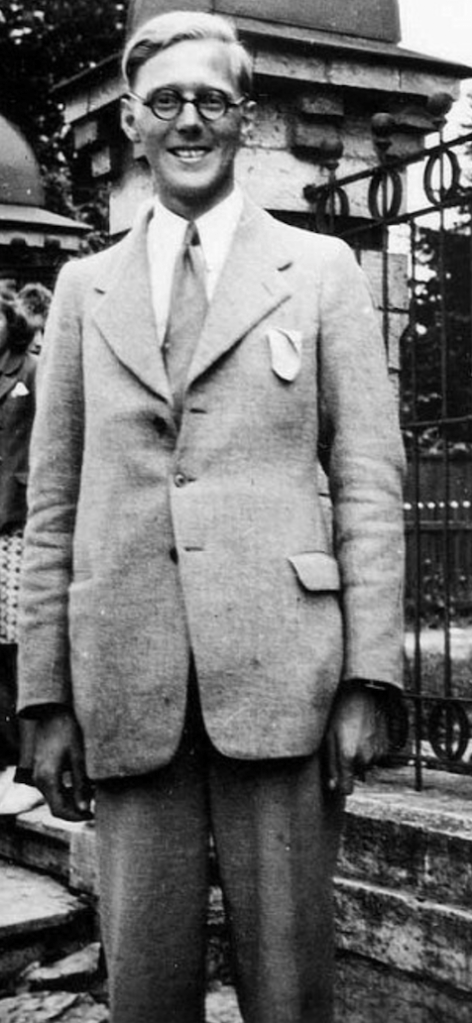
Ronald Seth colorful spy
Soon after, on Summer vacation from university, Nigel went to stay with friends in Malta, where he was introduced to yet another spy.
“I met another intelligence officer called Ronald Seth, at a dinner party, who was a prolific author who wrote an autobiography called: A Spy Has No Friends.
“I was enchanted by his stories. He parachuted into Silesia in about 1942 and was captured by the Germans and sentenced to death, and he had extraordinary adventures.
“In 1944, he was found by allies walking around Paris in a Luftwaffe uniform, so he had some explaining to do, but he was a fascinating guy.” Going on to say that Ronnie Seth then threw him a dinner party and introduced him to a woman that worked for MI5 during the war.
“They all knew each other, and I found myself on the periphery of their society if you like.
“So I found myself working for two intelligence officers as a professional researcher.”
I spent a long time trying to find Bronx, she was a lesbian that had many affairs
I asked how he had started working for the Centre for Counterintelligence and Security Studies in Washington DC and the CIA., and if that had come after writing his books.
“I had lectured at the CIA and they knew my work. I already knew several people there and I think they wanted a British component, and I must have written about fifteen books by the time I went to work at the C.I. Centre.”
Known for tracking down missing spies and mistresses, Nigel famously found the famous spy Garbo after 12 years, when he was presumed to be dead in Africa after faking his death for over thirty years, and Bronx the daughter of a Peruvian diplomat, selling ‘frocks’ in the South of- France.
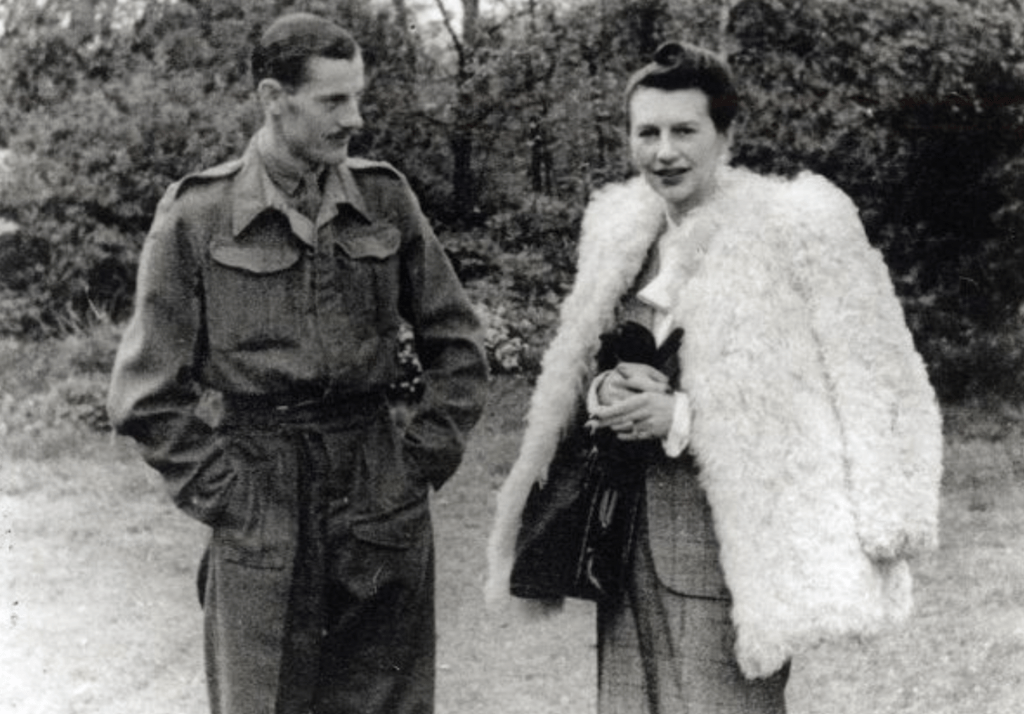
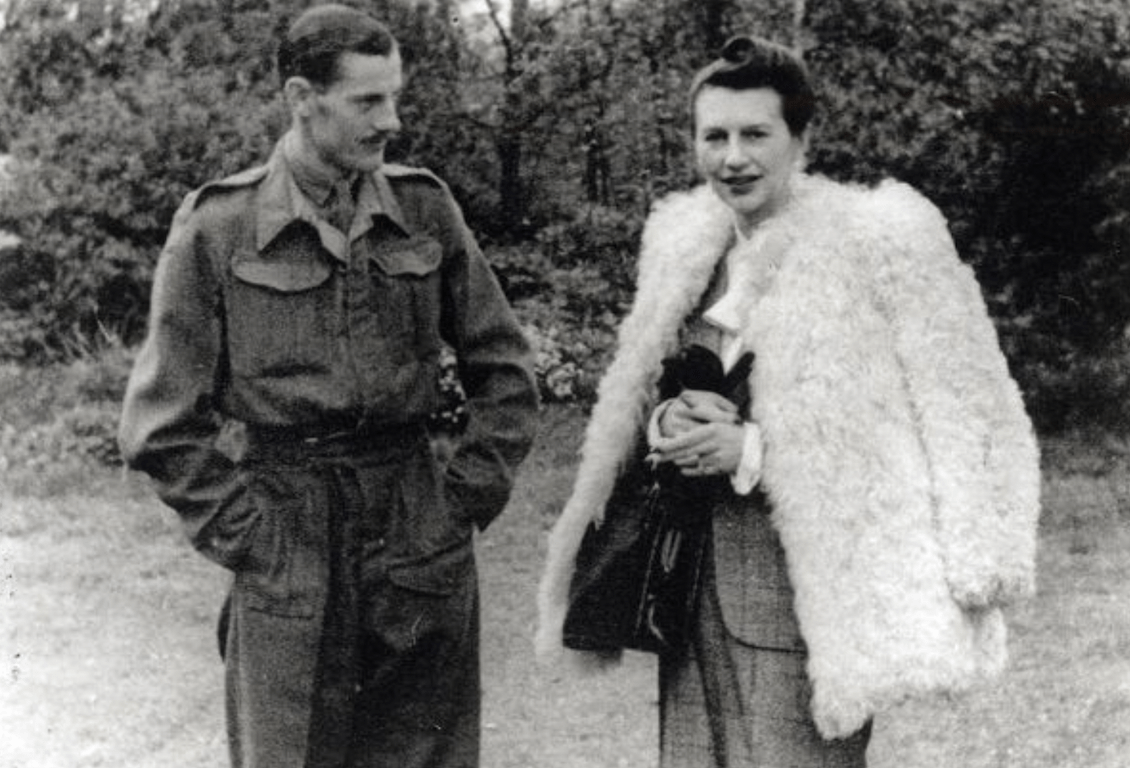
Elvira de la Fuente Chaudoir, also known as “Bronx.” Image: private collection.
Elvira de la Fuentes, with her access to London’s high society, was known as Bronx due to the cocktail she loved drinking at the Hyde Park Hotel. A German spy, one of her tasks was to find out about the D-Day landings.
“I spent a long time trying to find Bronx, she was a lesbian that had many affairs,” and was a mean bridge player.
“She played first-rate bridge with Lady Mountbatten, and with all sorts of senior figures in British society,” said Nigel, further stating that she wrote very long letters on gossip and political “tittle-tattle.”
“She subsequently married a Frenchman called Chaudoir,” saying that she was known by many names and that Hugh Astor her MI5 case handler, refused to let him know her name was de la Fuente, even though they were well-acquainted.
My KGB co-author was Oleg Tsarev
Nigel is a great raconteur, and his talk downstairs had espionage fans hanging on to his every word, as he walked them through a list of spies and fascinating detail from Aphra Behn, Madam Blanc, to Marta Peterson a CIA typist in Moscow that hid radio equipment in her bra.
His latest books are a two-part history of the German intelligence Service, 1933 – 1945: Hitler’s Nest of Vipers, and Hitler’s Trojan Horse.
“With plenty of female espionage agents.”
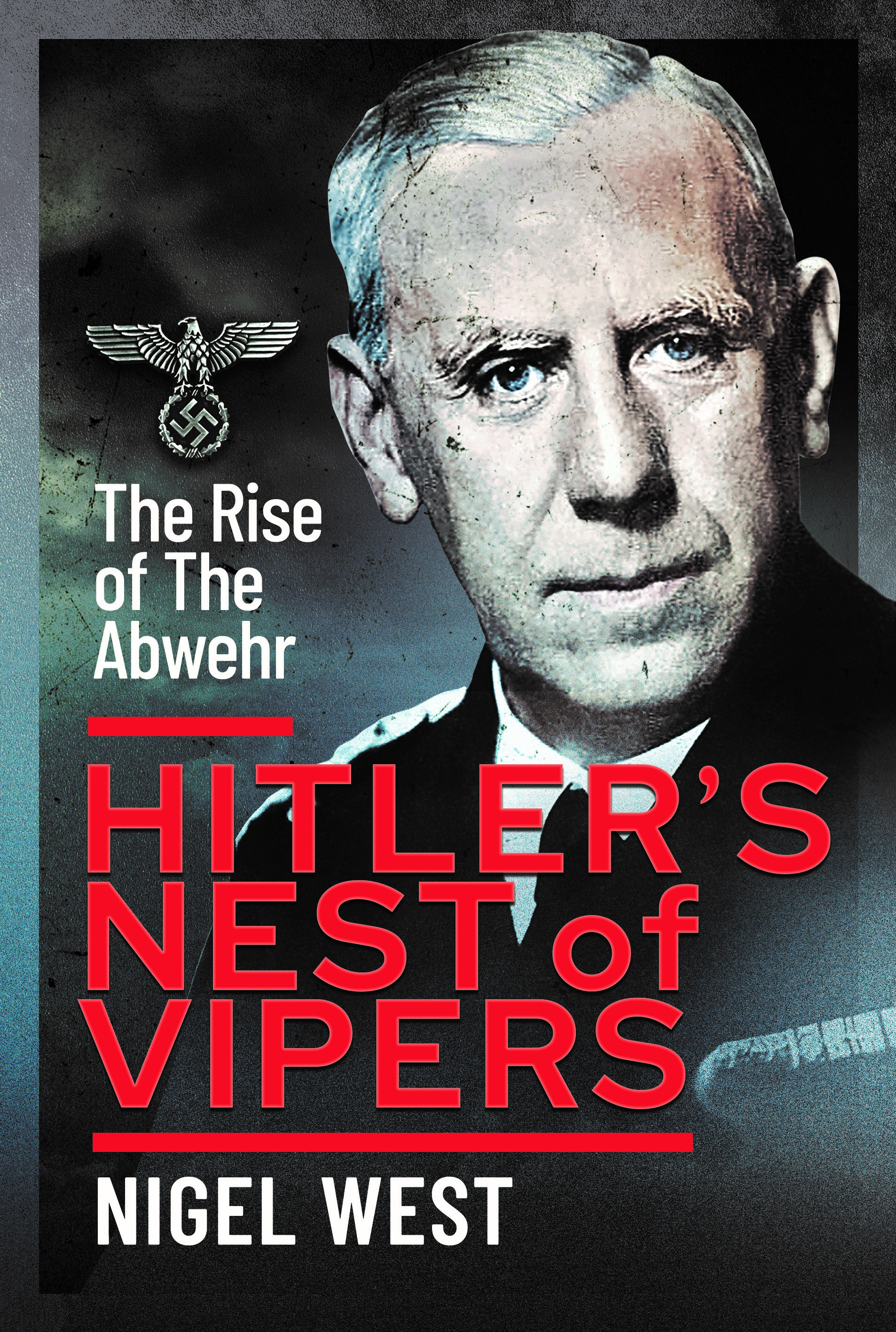
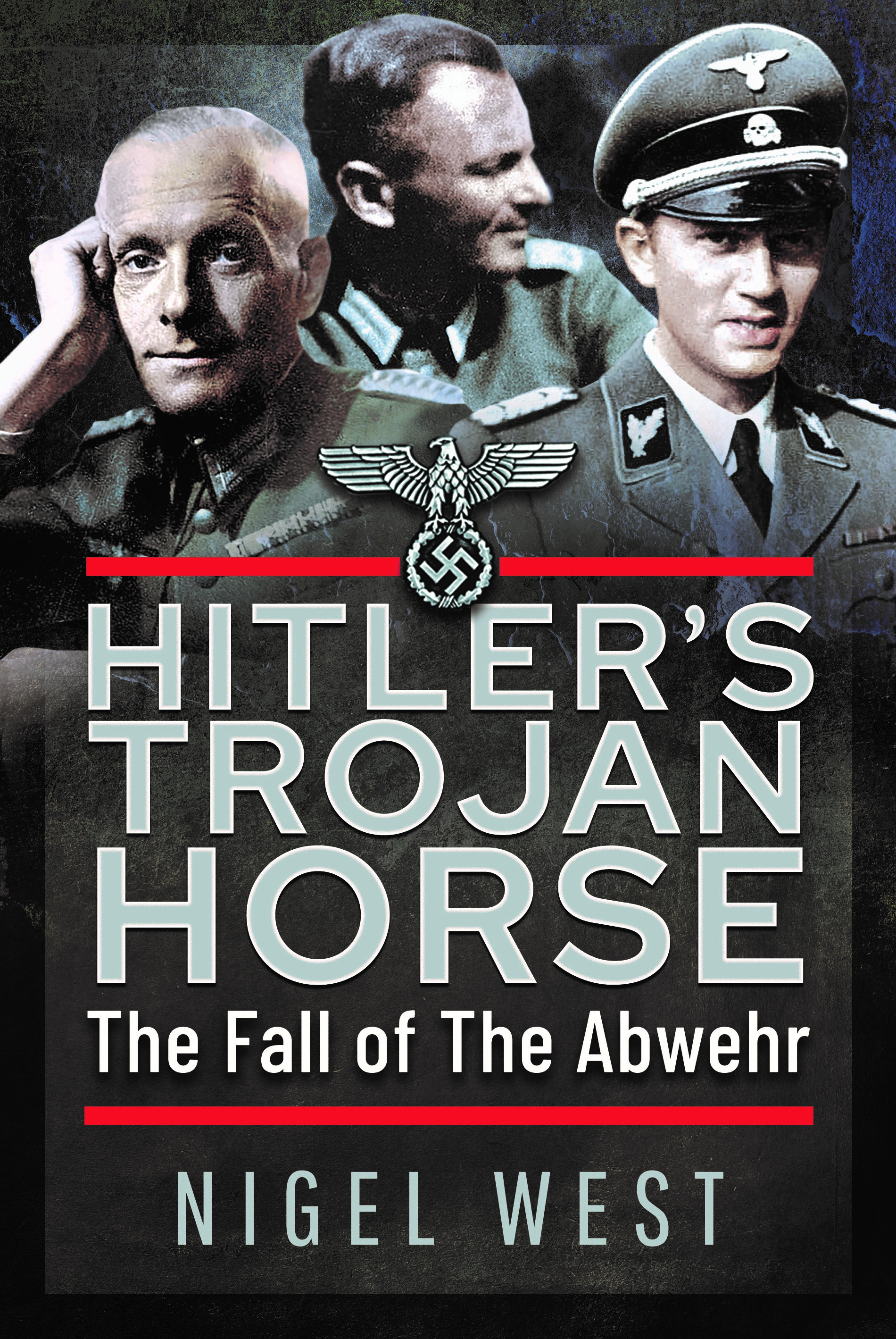
Two of Nigel’s most famous books were written from the KGB’s archives in Moscow, co-authored with KGB officer Oleg Tsarev, I asked how he had gained access.
“The British historian John Costello persuaded the KGB that his publishers would pay them a very large sum of money for access to the KGB archives, negotiating access for five authors.
“The agreement being that they have KGB co-authors. John wrote one book with the KGB and then died, and I was invited to take his place.
“My KGB co-author was Oleg Tsarev, who had been in England for about, I think, seven years, serving under journalistic cover. We wrote two books together, one called Crown Jewels: British Secrets at the Heart of the KGB Archives, and TRIPLEX: Secrets from the Cambridge Spies.”
Nigel went on to say how he found the KGB very professional, and Tsarev, for instance, would say where a document had been redacted or a codename had been altered, but he wouldn’t say why possibly as the code name was too close to the genuine name.
“I made friends with KGB officers, but I was perfectly aware they were loyal KGB officers,” Nigel said.
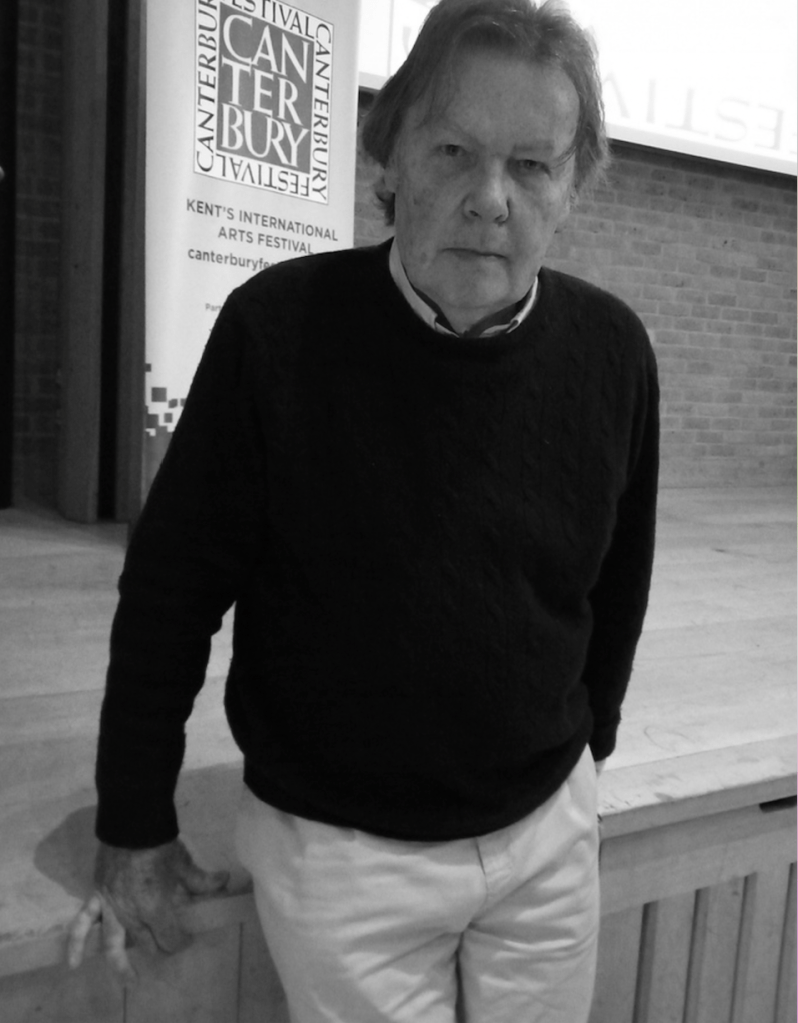
Nigel West
Case History
Nigel West is a pen name.
He is the European editor of the World Intelligence Review, and the editorial director of St Ermin’s Press.
A military historian & author, he specializes in intelligence & security; voted: ‘The Experts’ Expert’ by a panel of spy writers, by the Observer in November 1989.
The Sunday Times said:‘His information is often so precise that many people believe he is the unofficial historian of the secret services. His books are peppered with deliberate clues to potential front-page stories.’
A speaker at intelligence seminars, he has given lectures at both the KGB headquarters in Dzerzhinsky Square, Moscow, and at the CIA headquarters in Langley, Virginia.
He has also worked for the Centre of Counterintelligence & Security Studies, in Washington D.C., for 12 years.
- Arts
- Artwork
- Bhutan
- Blog
- Books
- Canada
- Europe
- Europe, UK
- European Union
- Himalaya
- Interview
- Russia
- South East
- UK
- United States
- World

Everyone here seems to have some weird secret or other – Iris Murdoch
BY JP
@Creatingpages

 DailyNewsVine